

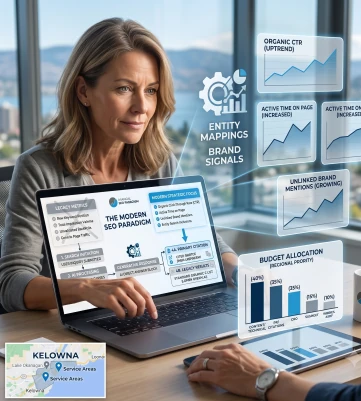
 Selecting a specialized digital agency for SEO Kelowna businesses rely on is critical when adapting to generative search environments. Modern search engine optimization relies on entity authority, high user engagement, and strong brand signals to protect rankings and capture high intent conversion traffic during search engine algorithm updates.
Search engine optimization has undergone a permanent structural transformation. The traditional reliance on static keyword rankings has yielded to generative summaries, predictive entity extraction, and conversational artificial intelligence interfaces. For businesses operating in the Okanagan Valley, maintaining online visibility requires moving away from outdated vanity metrics and adopting a modern strategy focused on brand footprint, user engagement, and structural authority.
The Paradigm Shift in Search Engine Optimization
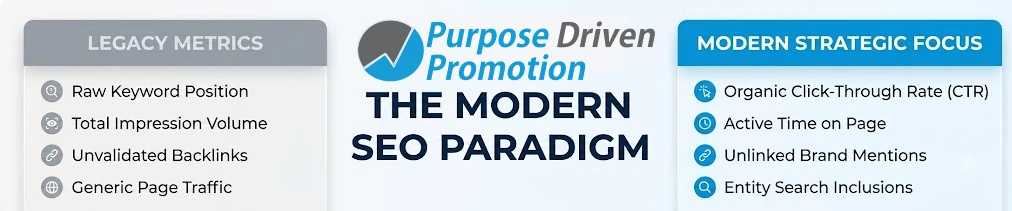
Generative artificial intelligence platforms and automated search summaries now process user intent before presenting traditional link listings. This change means that sitting in the top position on a standard search engine results page no longer guarantees traffic. Search engine systems evaluate how well a domain directly answers complex queries, how long users interact with the landing page, and whether the business is cited as a trusted source across the internet.
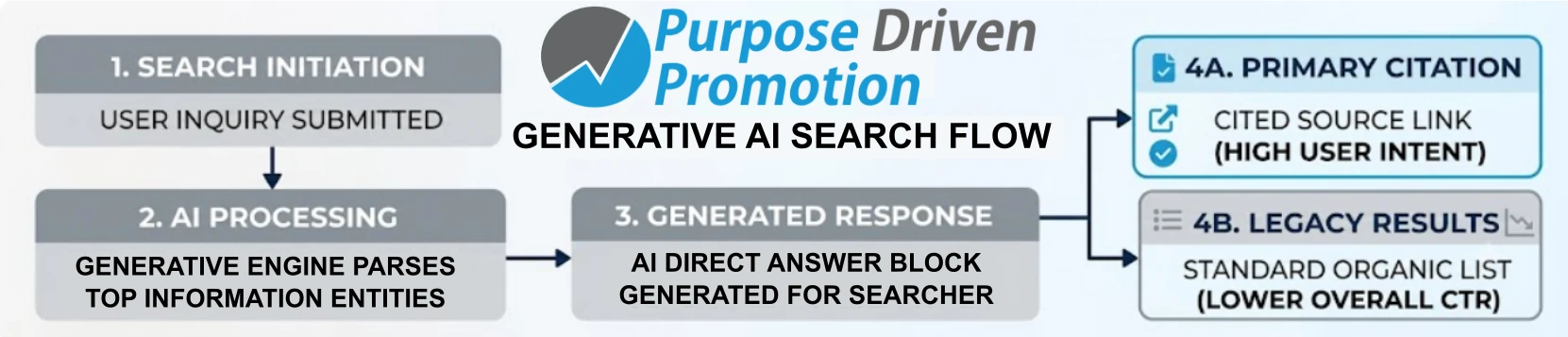
When search algorithms process digital content, they prioritize pages that offer deep topical coverage, structured data, and clear entity relationships. Businesses that continue to rely solely on traditional keyword optimization risk losing market share to competitors designed specifically for machine learning models and answer engine parsing.
Core Performance Indicators for Modern SEO Strategies
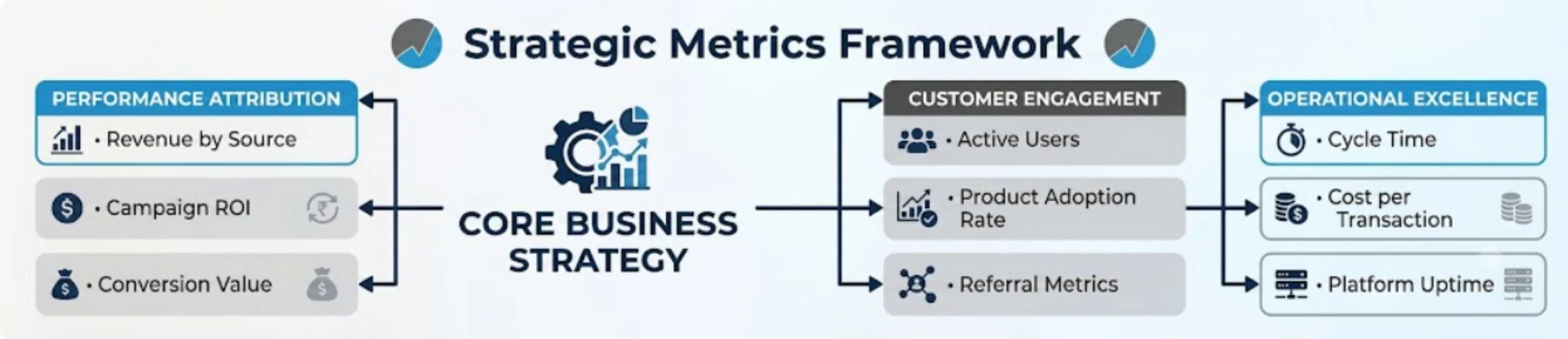
Evaluating digital performance through keyword positions alone provides an incomplete view of search health. Organizations must reallocate tracking resources toward user behavior and brand authority metrics that mirror search engine quality guidelines.
-
Organic Click-Through Rate (CTR)
Click-Through Rate measures the percentage of searchers who view a snippet and proceed to click through to the website. Modern search algorithms evaluate click patterns to determine if a search result accurately matches user expectations.
- Snippet Optimization: Search snippets must feature explicit value propositions and precise, intent-aligned answers rather than generic promotional statements.
- Structured Metadata: Implementing targeted Schema.org markup ensures rich snippets display essential details, such as client ratings or service parameters, directly on the search results page.
Low click-through rates on high-ranking pages signal to search engines that the search snippet fails to satisfy user expectations. Over time, this discrepancy causes the system to demote the page in favor of more relevant options.
-
Time on Page and Engagement Depth
Time on page reflects the duration a user spends consuming content after leaving the search results page. Search engines prioritize pages that hold user attention, as long sessions signal that the content answered the searcher’s query effectively.
- Eliminating Content Friction: Avoid placing large, decorative image files or long intro text above the main content area. Present direct answers within the initial two paragraphs to confirm query relevance immediately.
- Structuring Data for Readability: Break complex technical explanations into sub-points, data tables, and structured lists to keep readers engaged.
- Deploying Visual Breakdowns: Incorporate process flow diagrams, detailed comparison tables, and logical summaries to keep users engaged and decrease bounce rates.
-
Unlinked Brand Mentions and Off-Page Citation
Unlinked brand mentions are online references to a company’s name, services, or key personnel without an accompanying hyperlinked URL. Search algorithms read these references as co-occurrence signals to map real-world authority and industry relationships.
- Digital Press Distribution: Issue data-backed regional analysis reports to secure citations in regional news outlets and industry journals.
- Local Entity Building: Maintain accurate directory profiles and business records across established corporate networks to build consistent regional presence.
- Executive Thought Leadership: Share expert commentary on regional market trends to earn natural brand citations on reputable local and niche websites.
Technical Infrastructure and Semantic Architecture
A durable search engine optimization plan requires a clear site hierarchy. Information architecture should clarify topical relationships for search bots and human visitors alike.
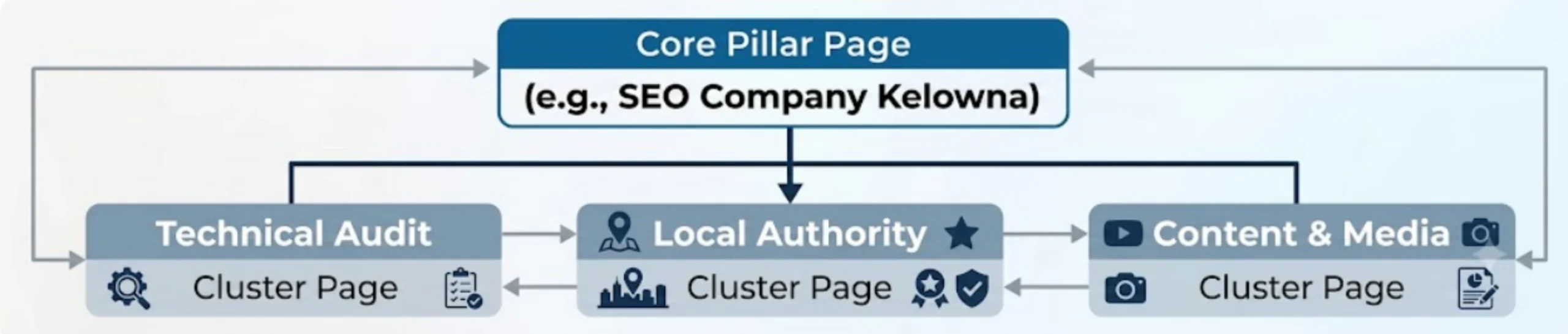
Strategic Information Hierarchies
Clustering related content creates strong topical authority across a domain. Supporting articles should link back to core service pages using context-rich anchor text.
| Architectural Component | Primary Technical Purpose | Implementation Requirement |
|---|---|---|
| Topical Hub Pages | Establish macro-level domain relevance for broad service terms. | Write comprehensive guides that address core customer pain points. |
| Spoke Cluster Content | Answer specific long-tail questions and secondary user inquiries. | Focus pages on distinct sub-topics with clear internal links back to the hub. |
| Structured Data Layer | Provide machine-readable context directly to search crawlers. | Add FAQ, Organization, and LocalBusiness schema markup across key pages. |
Resource Allocation for Long-Term Strategy Execution
Executing a successful search engine strategy requires allocating capital and technical effort toward high-impact areas while avoiding common industry missteps.
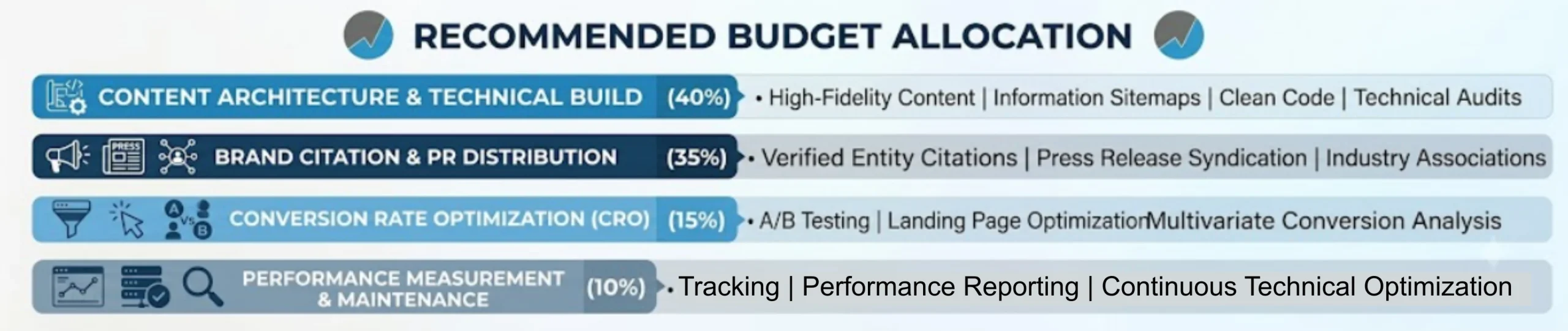
High-Impact Resource Investments
- Structured Content Engineering: Invest in clear technical content that provides direct answers to specific industry problems.
- Digital Public Relations: Focus link-building efforts on earning genuine brand mentions in regional news publications, local chambers of commerce, and established industry directories.
- Page Speed Infrastructure: Optimize hosting configurations, compress media assets, and clean up source code to meet Core Web Vitals targets.
Common Technical Pitfalls to Avoid
- Mass Content Generation: Avoid publishing low-value, automatically generated text. Search algorithms filter out generic content that lacks original insights or direct expertise.
- Irrelevant Backlink Packages: Avoid low-quality, syndicated link packages. Search systems ignore or penalize links from low-quality domains that lack topical relevance.
- Neglecting On-Page Usability: Avoid complex layouts that frustrate mobile users. Technical optimization must focus on delivering clean, fast-loading, easy-to-read pages.
Frequently Asked Questions
Traditional search engine optimization focuses mainly on ranking links on a standard results page. Generative search optimization aims to earn direct citations inside AI summaries, requiring clear content structure, authoritative entity references, and high user engagement.
Search engines process unlinked brand references as genuine votes of real-world confidence. These mentions help search algorithms map brand authority and topical relevance without relying solely on traditional hyperlinks.
Organizations should conduct technical site audits quarterly and review content performance monthly. Continuous monitoring helps identify performance drops early and ensures the site remains compliant with search algorithm updates.
Fast page loading speeds allow search bots to crawl and process content efficiently. Sites with strong technical performance and clean code are easier for search systems to parse and index, increasing their chances of being featured in AI-generated answers.
High visitor counts with low time on page signal that content failed to satisfy search intent. Search algorithms prioritize sites where users spend time interacting with the content, treating long dwell times as a signal of high-quality information.

Rob is an SEO strategist and digital marketer who has been active in the search engine optimization industry since 2001. With over two decades of experience, he has witnessed the evolution of search from the early days of keyword stuffing to the modern era of AI-driven intent.
His expertise lies in technical SEO, content strategy, and authority building. He specializes in helping websites navigate complex algorithm shifts by focusing on high-quality, human-centric content and robust E-E-A-T principles. Throughout his career, he has successfully managed digital growth for a diverse range of industries – providing a grounded and historical perspective that few in the field possess.
When he is not analyzing search trends or optimizing site architecture, he is often traveling and exploring the outdoors.
Let’s Work Together
TELL US MORE ABOUT YOUR PROJECT
Let us help you get your website found. Or, if you simply have a few questions, then fill out the form below and we will get back to you.